Wonder. Create. Grow.
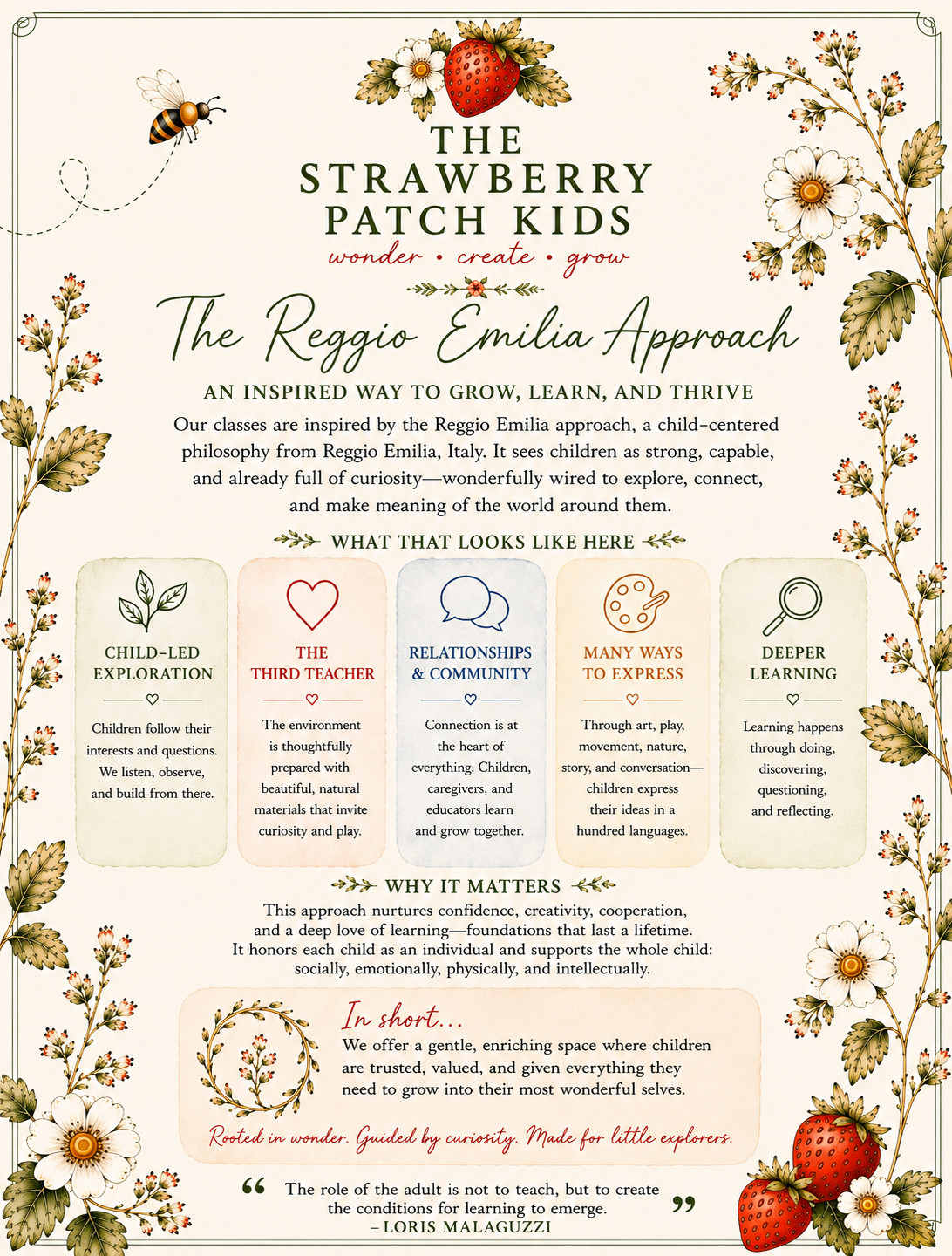
As an educator in a Reggio Emilia-inspired classroom, I plan the environment and the possibilities, but I never plan exactly what the children will do with them. There will always be different materials and invitations set up around the room—art materials, sensory play, building materials, loose parts, books, dramatic play, things from nature—but during the course of our class session, there will never be a point where I sit everyone down and say, “Okay, now we’re all making a butterfly!”
Instead, I pay attention to what the kids are interested in, and we build from there. Maybe I put out some clay and sticks and one child starts making a nest. Another decides the clay is food for a restaurant. Someone else spends twenty minutes figuring out how many sticks they can get to stand upright. All three of those kiddos are being inquisitive, exploring the environment, and playing and learning with unique materials—but they do so at their own pace, led by their individual interests.
Don’t be mistaken—there is structure to the class routine! Each has its own predictable rhythm, expectations, and a thoughtfully prepared space. The difference is that I’m not deciding ahead of time what every child should create, discover, or learn that day. I’m there to talk with them, ask questions, offer another material when it might take their idea further, and help when they need me—without ever taking over what they’re doing.
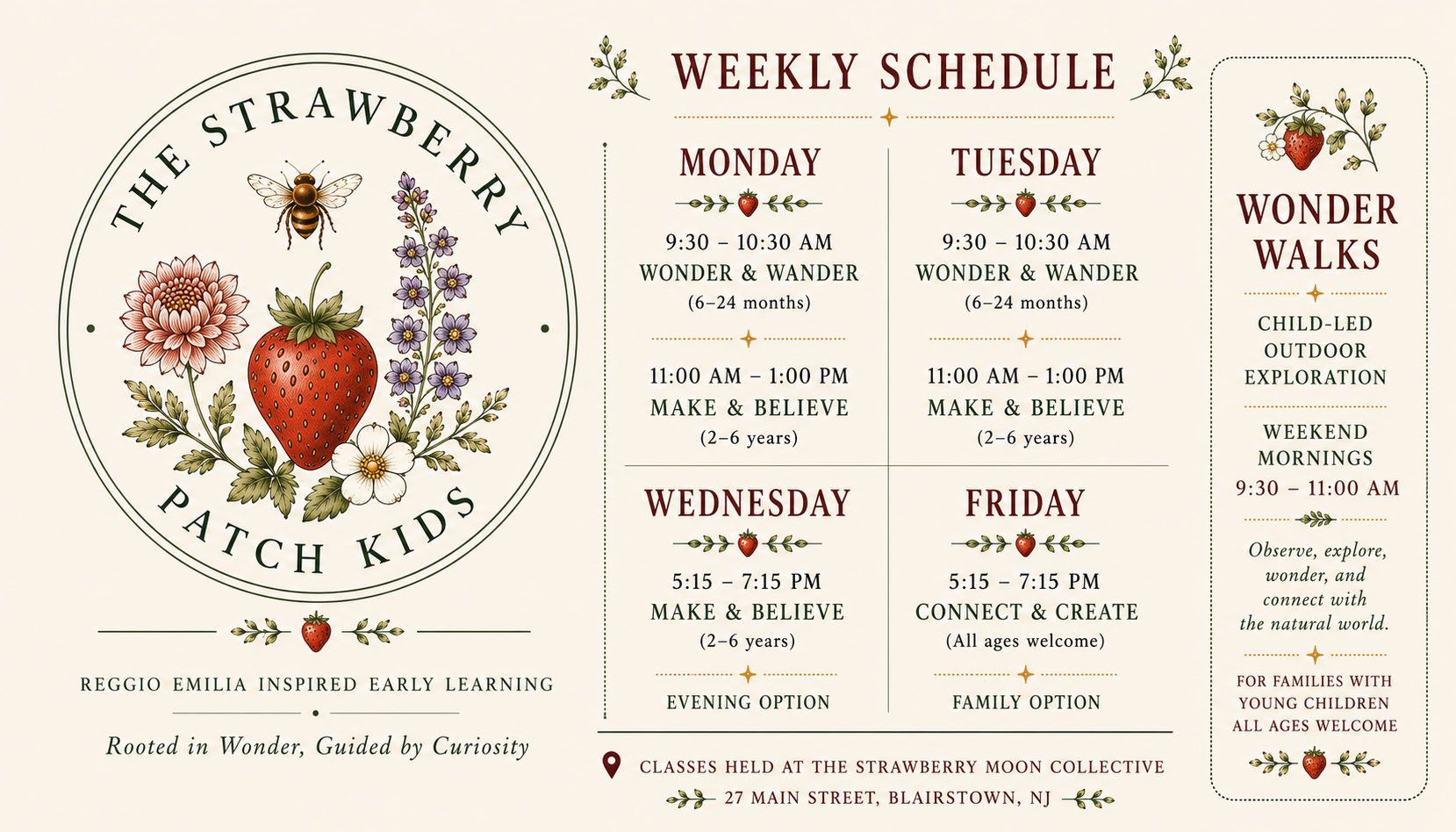
Classes look different depending on the age group. The basic philosophy stays the same, but the environment, materials, expectations, and the way I interact with the kids change based on where they are developmentally. With younger children, there’s naturally more sensory exploration, movement, repetition, and hands-on discovery, and I’m more physically present to help them navigate the space and one another. As the children get older, the invitations to play and explore become more complex and open-ended; there’s more opportunity for collaboration and problem-solving, and I can step back more and let their ideas take the lead.
From a parent’s perspective, it might look like a morning of playing, painting, building, getting messy, and talking about bugs. But underneath all of that, they’re experimenting, problem-solving, communicating, making choices, working with other children, and developing their own ideas.
Every child is unique in how they learn, play, and navigate their world. The Strawberry Patch Kids aims to foster that uniqueness in a safe, inclusive environment.
Miss Nik